
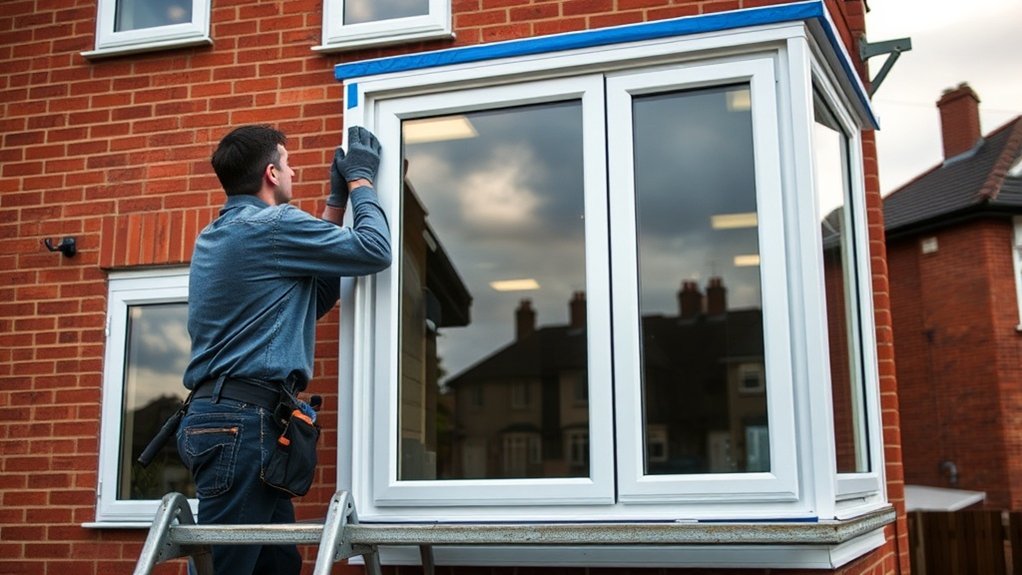
A supplied and fitted uPVC casement window in Nash Mills typically lands somewhere between £400 and £800, and the figure climbs once you move to aluminium frames, triple glazing, bay windows or heritage-style replacements. The local weather and the background hum of traffic mean the right specification matters as much as the price: low-E double or triple glazing with a low U-value, good compression seals and hardware tested to PAS 24. Any installer you use should be FENSA-registered or arrange Building Control sign-off so the work meets Building Regulations. The sections below walk through styles, frame materials, rules and how to pick a fitter for your property.
Key insights
- Budget around £400 to £800 for each fitted uPVC casement in Nash Mills; aluminium, triple glazing, bays and bespoke shapes push the cost up.
- Use a FENSA-registered installer or get Building Control approval so your new windows comply with Part L energy rules and Part K and B safety requirements.
- Match the window style to the building: sliding sash for Victorian and Edwardian houses, bays for 1930s semis, large casements or tilt-and-turn for newer flats.
- Specify low-E glass, warm-edge spacers, argon fill and sound seals to cope with damp winters and trim heating bills.
- Compare itemised quotes and written warranties, and insist on multi-point locks, internally beaded frames and anti-snap cylinders.
How Much Does Window Installation Cost in Nash Mills?
For a standard uPVC casement, most Nash Mills homeowners pay in the region of £400 to £800 per window, supplied and fitted.
Oversized openings, unusual frame shapes and triple-glazed units all sit at the top of that band. Aluminium frames are dearer than uPVC because the extrusions and fabrication cost more, though you get thinner frames and stiffer sashes in return. Tilt-and-turn and bi-fold configurations add hardware and fitting time, which shows in the quote.
Tinted glass, solar-control coatings and low-E units each add a little to the unit price, although they cut summer overheating and winter losses. The installation element also covers access (scaffold or tower where needed), removal and disposal of old frames, making good, and the paperwork for Part L and the ventilation rules in Part F.
How to Choose the Right Windows for Your Nash Mills Home
Choosing replacement windows in Nash Mills starts with performance: how well the unit keeps heat in and rain out. The two numbers to compare are the whole-window U-value and the solar heat gain figure (g-value), together with the type of glass that will handle local temperature swings and persistent drizzle. After that you weigh up uPVC, aluminium and timber frames for insulation, lifespan and how much upkeep you are willing to do.
Assessing Nash Mills’s Climate Needs
Winters in Nash Mills are mild but wet, summers are getting warmer, and rain arrives sideways on exposed elevations. That mix calls for windows that hold heat and shrug off moisture. A low U-value limits heat escaping through the glass and frame, while quality gaskets and weather seals stop wind-driven rain and draughts getting past the sash.
South- and west-facing rooms can overheat on sunny afternoons, so a solar-control coating or external shading on those elevations keeps rooms comfortable without making them gloomy. Sensible glass-to-wall ratios and trickle vents maintain fresh air while the rest of the window stays airtight. Think about noise too: homes near main roads or railway lines benefit from laminated or acoustic glass, which takes the edge off traffic rumble in dense streets.
Comparing Window Material Options
With your performance targets fixed, the frame material is the next decision. The usual options for Nash Mills properties are uPVC, aluminium, timber and composite, and each trades off insulation, strength, maintenance and looks differently. Weigh the U-value, the rigidity over wide openings and the whole-life cost against your home's exposure and style.
- uPVC insulates well and needs little more than a wipe down, though wider sashes need steel reinforcement inside the profile to stay square.
- Aluminium gives the slimmest frames and the strongest sashes; choose a thermally broken profile so the metal does not act as a cold bridge.
- Timber and composite frames insulate very well and look the part on period houses, but cost more at the outset.
Whichever frame you pick, pair it with the right glass: low-E for heat retention, solar-control for sunny elevations, or laminated for noise and security.
Window Styles That Suit Nash Mills Homes
The housing in Nash Mills spans more than a century of building styles, so the right window depends on the era of the house. Begin with the proportions, opening method and glazing bars the original builder used. Victorian terraces and Edwardian villas look right with vertical sliding sash windows, which can now carry modern sealed units and acoustic glass without losing their slim meeting rails.
On a 1930s semi, a bay or bow window pulls in daylight and adds floor area to the front room. Newer flats and infill houses generally suit wide casements or tilt-and-turn sashes, which give controlled ventilation and plenty of glass.
Leaded lights, Georgian bars and stained-glass panels can be built into the sealed unit on any of these styles, so the character stays while the U-value drops. Add trickle vents, a lockable night-vent position and an egress-compliant opening in bedrooms to keep the design compliant for years to come.
Best Window Materials for Nash Mills: uPVC, Aluminium, Timber
Picking between uPVC, aluminium and timber for a Nash Mills house comes down to four things: insulation, strength, upkeep and how authentic the frames look. uPVC usually gives the lowest U-value for the money, which is why it dominates energy upgrades on terraced streets. Aluminium wins where you want narrow frames, big panes and a hard-wearing finish, and current thermally broken systems insulate nearly as well as plastic. Engineered timber is strong and looks the most traditional, but expect to repaint or re-stain every few years.
Weigh each material against:
- Whole-life cost, from repainting to replacing handles and hinges
- Compatibility with upgraded glass such as solar-control or tinted units
- Local exposure to traffic pollution, damp and sunlight, all of which age seals and finishes
Replacing Windows in Nash Mills Period and Conservation Homes
Older houses in Nash Mills, and anything inside a conservation area, need windows that respect the street while performing like modern units. Before anyone orders frames, record what is there now: sash, casement or bay, the sightlines, the mullion depth and any decorative glazing pattern.
Keep the look by matching the original section sizes, then fit slimline or standard double-glazed units inside them for warmth and quieter rooms. Engineered timber or heritage aluminium with a thermal break both give long life without changing the appearance from the pavement.
Details sell the result: hand-finished joinery, putty-line glazing beads and glazing bars in the right proportions keep the façade coherent. At the same time, renew weather seals, catches and ventilation so the house is airtight and comfortable while the historic fabric stays intact.
Nash Mills and UK Window Regulations You Must Know
New windows in Nash Mills must satisfy Building Regulations, the local planning regime and any conservation restrictions on your street. The main legal points cover structural support, escape routes from bedrooms, safety glass in low-level and door-adjacent positions, and Approved Document L for energy together with K for guarding and B for fire. Meeting them means your windows achieve the required U-values, ventilation and glazing safety that Building Control and the FENSA or Certass schemes check.
Key Legal Requirements
Fitting windows in Nash Mills involves three layers of control beyond choosing a frame: planning, Building Regulations and heritage. Planning officers look at appearance as well as performance, and in conservation areas and on listed buildings they can dictate materials, profiles and opening styles.
In practice you will need to show:
- Planning or listed building consent where you change elevations in a protected area; replacement profiles and materials must match or respectfully echo the originals.
- Building Regulations approval, either through Building Control or a Competent Person Scheme installer who self-certifies.
- Any freeholder or lease permissions, restrictive covenants and Article 4 Directions that limit changes to windows.
Sorting these out before ordering avoids enforcement action later.
Safety And Efficiency Standards
Beyond appearance, every window installed in Nash Mills must hit measurable targets in the safety and energy sections of the regulations. The relevant documents are Approved Documents K, L and B, covering guarding and glass safety, thermal performance and means of escape.
Toughened or laminated glass goes in critical locations such as low panes and glazing beside doors, restrictors go on upper-floor openers, and guarding heights must be met where there is a drop. For energy, replacement windows in England need a whole-window U-value of 1.4 W/m²K or better, usually achieved with low-E glass, warm-edge spacers and argon-filled units.
On site, factory-glazed frames, an accurate survey and trickle vents sized for each room keep the job efficient. Confirm the installer self-certifies through FENSA or Certass so the compliance certificate, U-value data and airtightness evidence are on file for future EPCs or retrofit work.
Energy‑Efficient Windows for Nash Mills’s Climate
With damp winters and warmer summers, energy-efficient windows for Nash Mills hinge on three properties: U-value, solar gain and airtightness. Together they decide how much heat leaks out, how much sun gets in and whether condensation forms on the glass. Low-U, low-E double or triple glazing with warm-edge spacers and modern weather seals covers all three.
Frames matter as much as glass. Multi-chambered uPVC or thermally broken aluminium with a deep glazing pocket reduces heat passing through the frame edge. On sunny elevations, a light tint or solar-control coating fine-tunes how much warmth each room receives.
The upgrades that pay back fastest are:
- Low-E coatings chosen for a heating-dominated climate like Nash Mills's
- Argon or krypton fill between the panes to improve centre-pane insulation
- Careful fitting with continuous insulation and sealing around the frame so there are no gaps
Window Security Features That Matter in Nash Mills
Good glazing keeps you warm, but windows in Nash Mills also need to resist levering and opportunist break-ins. The first line of defence is a multi-point locking system that throws bolts into the frame at several points, so the sash cannot be flexed open. Add steel-reinforced profiles, beads on the inside so the glass cannot be removed from outside, and laminated glass that holds together even when struck.
On ground-floor and easily reached windows, specify hinges with security claws and anti-lift protection. Night-vent and ventilation positions should lock positively rather than relying on a friction stay. Hardware tested to PAS 24, cylinders with anti-snap and anti-bump protection, and handles that are hard to force all deter intruders without spoiling the look of the window.
How to Choose a Reliable Window Installer in Nash Mills
Judging window installers in Nash Mills comes down to three checks. First, confirm their registration with FENSA or a comparable self-certification scheme, plus insurance. Second, ask for itemised quotes that list frame material, glass specification, hardware, labour and programme. Third, put the warranties side by side and compare the length of cover, what the fitter guarantees and what the manufacturer backs.
Checking Credentials And Certifications
Separating a competent Nash Mills installer from a risky one begins with paperwork. Ask for the Companies House number and a copy of their public liability insurance, then check both against the official registers. That confirms they are a real trading business who can be held to account if something goes wrong.
Then look at scheme membership. You want a firm registered with FENSA, Certass or a similar body that audits installation standards and compliance with Part L and Part F.
Three credentials carry the most weight:
- Trade body membership that involves technical inspections and ongoing training
- Approved installer status from the manufacturer of the window system you are buying
- Evidence of training in energy-efficient and acoustic installations, not just general fitting
Comparing Quotes And Warranties
Once credentials check out, examine the quotes with equal care instead of defaulting to the cheapest. Look at how each firm prices the job: does the quote split out profiles, glass, hardware, labour, waste removal and access equipment, or is it a single lump sum? An itemised quotation lets you compare like with like.
Warranties deserve the same scrutiny. Separate the manufacturer's cover on frames, sealed units and finishes from the installer's workmanship guarantee, and note how long each runs. Check whether the warranty passes to a new owner if you sell, and how call-outs and remedial visits are handled.
Words like "lifetime" or "standard" mean little until they are written down, so ask for the terms in print. A quote that is a little higher but backed by clear, documented guarantees usually works out cheaper over the life of the windows.
What Happens on Window Installation Day?
On the day, the fitting team arrives, checks the job sheet and walks the house with you to confirm each window's size, position and any awkward access. Dust sheets go down over floors and furniture, and frames, sealants and tools are laid out so work moves room by room.
Old frames come out, the openings are checked for sound brickwork and lintels, and the new frames are packed level, plumb and fixed with the correct anchors. Low-expansion foam and perimeter sealant close the gap between frame and wall for an airtight, weatherproof finish.
- Removed frames, glass and rubble are taken away for recycling or licensed disposal.
- Each window is inspected for glass quality, hardware operation and straight sightlines before sign-off.
- The team gives the glass a first clean so you can check it before blinds or curtains go back up.
Maintenance Tips to Make Your Nash Mills Windows Last
After installation and sign-off, how long your windows perform in Nash Mills's weather depends on routine care. Wash the glass with a mild cleaner and a microfibre cloth to protect the low-E coating, and clear the drainage slots and tracks so rainwater can escape instead of sitting in the frame.
Once a year, run a hand round the gaskets and external sealant; replace any failed perimeter sealant to keep the frame airtight. Check that sashes close square against the frame, then put a silicone-based lubricant on hinges, locks and rollers to stop them seizing.
Keep an eye on timber trims and sills for flaking paint, hairline splits or gaps that could funnel water into the wall. Repaint or reseal promptly so every junction with the frame stays weathertight.
Window Installation Problems and When to Repair vs Replace
A well-chosen window can still fail early if it was fitted badly, so homeowners in Nash Mills need to tell the difference between faults a glazier can put right and faults that mean a new window. The symptoms point the way: localised problems favour repair, widespread failure favours replacement.
Common fitting faults include:
- Frames fixed out of square, so sashes catch, handles wear early and the seals no longer meet.
- Missing or failed flashing and sealant, letting water track behind the frame and rot the reveal.
- Uninsulated gaps between frame and wall that create a cold bridge, bringing condensation, mould and higher bills.
Draughts at one corner or a small leak can usually be fixed by resealing, re-flashing or adjusting the sash. Repeated leaks, rotten sills or twisted frames are a different matter; at that stage a full replacement is the better investment.
Find out more about our Nash Mills glaziers and the other work we do locally.
Frequently Asked Questions
How Does Window Installation Affect My Nash Mills Home’s Resale Value?
New windows tend to lift the sale price because buyers in Nash Mills read them as lower running costs and no imminent bills. Efficient double or triple glazing improves the EPC rating, cuts heating costs and reduces road noise, all of which surveyors and buyers notice. Fresh frames and tidy sightlines also sharpen the appearance from the street, which matters for first impressions in listings. Keep the FENSA certificate and warranties in your sale pack, because solicitors will ask for them.
Can New Windows Help Reduce Noise From Nash Mills’s Busy Roads?
They can make a clear difference. Laminated acoustic glass, a wider cavity between panes and continuous compression seals all reduce traffic noise, and triple glazing with different pane thicknesses helps further. Frame choice matters as well: well-sealed uPVC, composite or thermally broken aluminium all perform if fitted tightly. Ask the supplier for the Rw rating of the whole window, not just the glass, and make sure the fitter seals the frame to the wall properly, since gaps around the perimeter let sound in regardless of the glass.
Are There Grants or Incentives for Installing Efficient Windows in Nash Mills?
Some funding exists, though windows are rarely the headline measure. The ECO4 scheme and local authority retrofit grants occasionally include glazing when it forms part of a whole-house upgrade, and eligibility usually depends on the property's EPC band, household income or benefits status. Ask your installer what is open at the time; many handle the eligibility checks and the compliance paperwork, and can point you to the right council department or energy adviser.
How Do New Windows Impact Nash Mills Homes Prone to Condensation and Damp?
They help considerably. Condensation forms when warm indoor air meets a cold surface, and single or tired double glazing is often the coldest surface in the room. Modern units with low-E glass, argon fill and warm-edge spacers keep the inside pane warmer, so moisture is far less likely to settle on it or around the frame edge. Trickle vents give damp air a controlled way out, and proper sealing stops cold draughts chilling the reveal.
Can I Live in My Nash Mills Home During a Full Window Replacement?
Almost always, yes. A professional team works one room at a time, removing and fitting each window within the same visit so the house is never left open overnight. You will need to move furniture and curtains away from each window, cover anything sensitive to dust and keep pets out of the work area. Avoid attempting a whole-house job yourself; getting frames plumb, sealed and compliant is skilled work. Afterwards, a quick seasonal check of seals, drainage slots and hardware keeps the new windows in top condition.
Summary
Done properly, window installation in Nash Mills improves warmth, cuts noise and tightens security in one job. The outcome rests on three choices: the right glass and frame for your house, compliance with Building Regulations, and a registered installer who documents the work. If you would like a free, itemised quote for your property, call us or request a survey and we will measure up and advise on the best specification for your home.