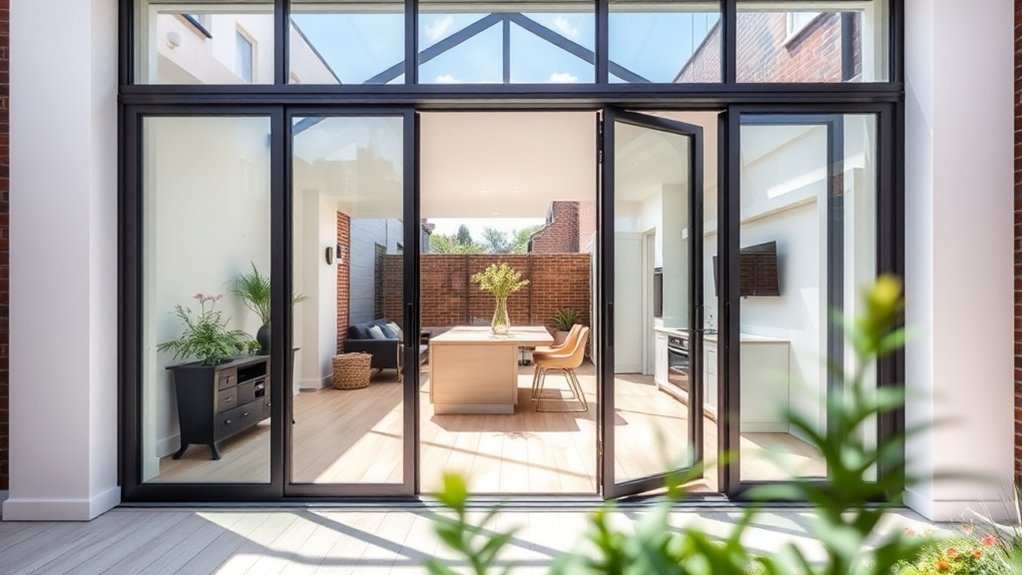
Bifold door glazing in Abbots Langley is a balancing act between slim aluminium or timber frames, low-E double or triple glazed units and warm-edge spacers, all chosen to reach a whole-door U-value of around 1.0 to 1.2 W/m²K under Approved Document L while keeping solar gain and street noise under control. The specification also has to cover PAS 24 rated laminated security glass, trickle ventilation, drainage paths and, in conservation areas, sightlines that respect the neighbouring joinery. With those details settled you get a wide opening onto the garden, strong performance and an installation that passes building control without argument.
Key insights
- Slim-sightline frames in thermally broken aluminium or a timber-look finish give Abbots Langley homes the most glass while respecting modern or heritage settings.
- Argon-filled low-E double glazing suits most properties; triple glazing is worth the extra weight only where noise or thermal demands justify it.
- Confirm the Part L U-value, PAS 24 security rating and any Article 4 or conservation area restrictions before committing to a system.
- Laminated or toughened safety glass, multi-point locks and continuous gaskets provide burglary resistance, impact safety and lasting weather sealing.
How Bifold Glazing Works in Abbots Langley Homes
As a bifold runs along its track, a set of top- or bottom-hung panels travels on precision rollers and, at the end of the run, squeezes its gaskets against the frame so the door is thermally sealed and weather-tight again. Every sash hangs from multi-leaf carriers that spread the weight into the head and the threshold, which is why the glass weight and the hardware rating have to be matched.
In Abbots Langley, WD5 period properties, new thermally broken aluminium or composite profiles are usually meeting uneven masonry reveals. Packers, shims and a silicone bed hold the glazing line straight, while warm-edge spacer bars, drainage slots and trickle vents keep condensation under control. Skip those details and the result is early hardware wear, misted units and a door that never quite closes cleanly.
Frame Materials and Styles for Abbots Langley Bifold Doors
Once the glass is specified, the frame has to carry that weight, meet the Part L target and suit the architecture of Abbots Langley, WD5. The usual shortlist is thermally broken aluminium, aluminium-clad timber, or engineered timber with a laminated core for stability on wide-span bifolds. Slimline aluminium gives the highest glass-to-frame ratio and the most precise sightlines; a polyamide thermal break, low-conductivity gaskets and warm-edge spacers keep the Uw value within the limit. On a heritage street, fine putty-line timber or aluminium with a steel look and applied glazing bars can echo the existing window pattern. Custom tints, frits or ceramic-printed designs are possible when bead depths, rebate sizes and drainage paths are coordinated with the chosen glazing system from the outset.
Double vs Triple Glazing for Abbots Langley Bifold Doors
Both double and triple glazing can satisfy Part L in Abbots Langley, so the choice comes down to U-value against unit weight and real-world behaviour in an urban climate. Double glazing reaches compliant U-values with a slimmer unit, lighter sashes and less strain on the hardware, which counts for a lot on a wide bifold, and in retrofits to older houses it usually fits existing lintels and thresholds more comfortably. Triple glazing improves thermal performance further, but the extra mass loads the hinges, rollers and head track, and if the frame system is not engineered for it you risk deflection and repeat service calls. For a quiet, thermally stable garden room in a contemporary scheme, a triple-glazed bifold on a frame rated for the weight is worth the extra outlay.
Glass Types: Low‑E, Solar Control and More
For bifold glazing on a Abbots Langley property, the usual decision is between a low-E coating to improve the U-value and solar control glass to manage the g-value. Rather than simply asking for energy-efficient glass, you are choosing coating types, tints and performance ratings that alter heat loss, solar gain and how much visible light gets through, matched to a climate that needs heating in winter and shading in summer.
Low‑E Glass Benefits
Standard double glazing lets a lot of radiant heat escape; a low-E coating reflects long-wave heat back into the room, lowering the U-value and improving the whole-frame transmittance. In Abbots Langley, WD5 refurbishments that fit bifolds into a period house, that gain matters because you cannot always add insulation elsewhere. Different soft-coat low-E products fine-tune the g-value, daylight transmittance and the inside surface temperature of the glass, which improves comfort near the door, reduces the cold downdraught that large panes can create and lowers the risk of internal condensation.
Solar Control Glass Options
The next choice is the solar control specification, balancing g-value, visible light transmittance and U-value so solar gain is limited without making the room gloomy.
-
Low-E solar control: a dual-purpose coating that reduces heat loss and reflects near-infrared radiation at the same time.
-
Neutral solar control: a spectrally selective coating with high clarity and lower internal glare.
-
Tinted solar control: body-tinted glass with a low-E or solar coating added, for a wider choice of shades.
-
Patterned glass with control: fritted or printed glass combined with a solar coating, giving shading, privacy and façade interest while still meeting the overheating requirements applied in Abbots Langley.
Acoustic Bifold Glazing for Noisy Abbots Langley Streets
Acoustic bifold glazing gives you a wide opening to the garden while cutting the traffic, rail and aircraft noise that reaches many Abbots Langley streets. The answer is laminated acoustic glass with asymmetric panes, using two different thicknesses to break up the frequencies produced by buses, sirens and trains. A wider cavity, designed for a weighted sound reduction of around 35 to 45 dB Rw, works with warm-edge spacers and argon fill so thermal performance is not lost. High-compression gaskets, multi-point locking and accurately set thresholds remove flanking paths and resonance. Ask the manufacturer for laboratory-tested acoustic data so the installation can be shown to meet any planning condition.
Energy Efficiency and U‑Values in Abbots Langley Homes
Specifying bifold door glazing for a Abbots Langley property means understanding U-values, because they quantify the heat lost through glass and frame. A lower whole-unit figure, not just the centre-pane number, means better thermal performance, less space heating and easier Part L compliance.
Understanding U‑Values
The U-value measures heat transfer in W/m²K through the complete door: glass, frame, spacers and seals. When comparing systems, ask about:
- Whole-door U-value against centre-pane U-value, since many brochures quote only the flattering one.
- The glass build-up: double or triple, gas fill, low-E coating and any tint.
- Frame material and thermal break, and how sightline depth trades against conductivity.
- The effect of spacer bars and gaskets on performance at the edge of the glass.
Glazing For Energy Savings
For the best savings, specify double or triple glazing with an argon or krypton fill, warm-edge spacers and a soft-coat low-E product, which brings the whole-door U-value down toward 1.0 to 1.2 W/m²K. In a conservation area, slim units, putty-line sightlines and a sash-style mullion layout keep the period look without giving up performance. On west- and south-facing doors a solar control coating holds back summer gain while still admitting useful winter sun.
Security and Safety Features in Bifold Door Glazing
Bifold door glazing in Abbots Langley, WD5 has to meet the security and safety demands of dense urban living and UK standards. The glass is one part of an integrated security envelope that includes the frame, beads and hardware.
- Laminated security glass: multiple PVB or ionoplast interlayers resist manual attack, hold broken glass together and underpin PAS 24 certification.
- Toughened safety glass: heat treatment makes the pane impact-rated and ensures it breaks into small granules, reducing injury risk in family homes.
- Obscuration with control: frosted finishes and patterns give privacy without blocking the sightlines needed for CCTV and natural surveillance.
- Hardware and glass interface: internal beading, strong hinge fixings and continuous gaskets stop panels being deglazed from outside and improve resistance to jemmying.
Planning and Conservation Rules for Bifold Doors in Abbots Langley
Before an opening is sketched or glass specified, a bifold proposal has to be checked against the planning and conservation controls in Abbots Langley, which can be stricter than national guidance. An Article 4 Direction, the conservation area appraisal and listed building consent each have a say in sightlines, the ratio of frame to glass and the threshold detail. Planners will judge how the bifolds read within the host elevation, so expect to provide a heritage impact statement, 1:20 joinery details and sections showing minimal intervention to the original fabric. Align the glazing specification with Part L, noise targets and solar gain limits, and talk to the conservation officer early.
See our main glass doors and entrances page for the full range of options in Abbots Langley. Related work we take on includes composite door glazing and automatic door installation.
Frequently Asked Questions
How Do Bifold Glazed Doors Affect Home Resale Value in Different Abbots Langley Boroughs?
The uplift varies with the local market. In the higher-value parts of Abbots Langley, buyers expect slim, thermally broken systems with low U-values opening onto a landscaped garden, and a well-detailed bifold supports the asking price. In more affordable districts, value depends on sensible specification: hardware rated to PAS 24, argon-filled glass and tidy sightlines. In every case, a poorly installed bifold with misted units or a sagging leaf will cost you at sale time.
Can Existing Bifold Doors Be Retrofitted With Upgraded Glazing Later?
Usually, yes, provided the profiles and hardware are rated for the heavier units. A competent installer checks the sash sightlines, the hinge and roller load capacity and whether the gaskets suit the new unit thickness before anything is ordered. The typical upgrade is to low-E, argon-filled laminated units, which improves energy efficiency and security in one step, with warm-edge spacers and the correct overall thickness to avoid sash drop and premature seal failure.
How Do Bifold Glazed Doors Perform in Abbots Langley’s Hard Water and Pollution Conditions?
They hold up well. Glass itself resists mineral-laden water and airborne particulates, and modern seals keep driving rain out. The visible problem is limescale spotting, which shows badly on clear glazing, so we recommend low-iron glass with a hydrophobic or photocatalytic coating to reduce etching and staining. Hardware in marine-grade stainless, EPDM gaskets and a thermally broken aluminium profile resist corrosion and keep the panels stacking smoothly.
Are There Smart-Home Integrations Available Specifically for Bifold Door Glazing Systems?
Yes. Contact sensors fitted in the frame, motorised locks and in some cases electrochromic glass or integral blinds can connect to Zigbee, Z-Wave or Matter hubs, with scenes triggered through Alexa, Google Home or HomeKit for security and temperature management. Before you order, confirm that the door hardware accepts low-voltage wiring, that the system uses secure APIs and that firmware can be updated over the air.
Summary
Choosing bifold door glazing in Abbots Langley means setting U-values, selecting profiles and balancing thermal efficiency, acoustic control and solar gain against sightlines, panel weight and hardware loading, all within Part L, Secured by Design and any conservation constraints. Call us for a free survey and an itemised quotation.